
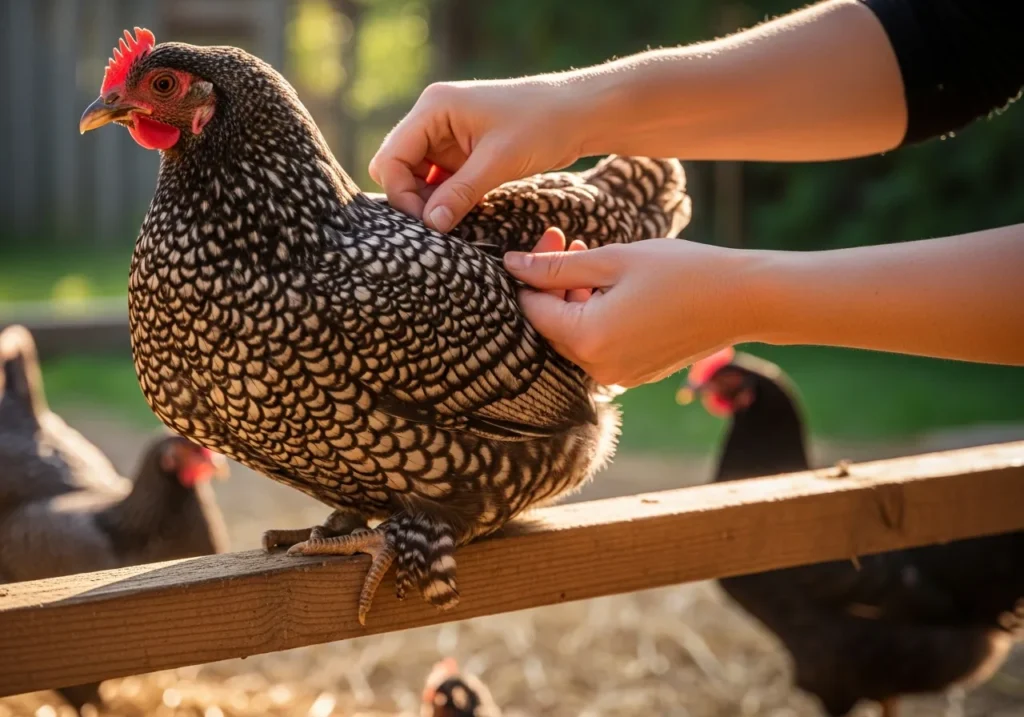
Backyard flocks are generally hardy, but a few routine habits make a real difference in catching problems early — chickens, like most prey-adjacent animals, don’t always show illness obviously until it’s progressed.
Daily Health Checks
A quick daily observation — watching birds move around the run, checking that everyone’s eating and drinking, and a glance at egg output — catches most issues early. A sudden drop in egg-laying across the flock, in particular, is often one of the first signs something’s off, whether that’s illness, stress, or a seasonal molt.
Common Health Issues
External parasites (mites and lice) are common and usually manageable with regular coop cleaning and, if needed, a poultry-safe dust treatment. Respiratory issues can develop in poorly ventilated or damp coops. Bumblefoot (a foot infection, often from a cut or rough perch) is another common issue worth checking for during handling.
Predator Stress
Even a near-miss predator encounter (a hawk overhead, a dog at the fence) can cause real stress in a flock, sometimes showing up as reduced egg production for days afterward. A secure coop and run reduce both actual predation risk and this kind of stress.
Molting
Once or twice a year, chickens go through a molt — shedding and regrowing feathers — during which egg production typically drops or stops. This is normal, not a health problem, though a molting bird benefits from extra protein in the diet to support feather regrowth.
When to Call a Vet
Lethargy, labored breathing, significant weight loss, or a bird that’s isolating itself from the flock are signs that warrant a vet call — ideally one with poultry experience, since not all vets treat backyard chickens.
See Signs Your Backyard Chicken Is Sick for a closer symptom breakdown.
Common Health Issues in Backyard Flocks
Respiratory infections, often triggered or worsened by poor ventilation or ammonia buildup from insufficiently cleaned bedding, are among the most common backyard flock health issues. Parasites — both external (mites, lice) and internal (worms) — are another recurring concern requiring periodic monitoring and treatment. Egg-binding (a hen unable to pass an egg) and reproductive tract issues are more common in certain high-production breeds, particularly as hens age. Bumblefoot, a bacterial infection of the foot pad often from injury or poor perch surfaces, rounds out the most frequently seen issues new keepers should learn to recognize.
Coop Ventilation — More Important Than Most Keepers Realize
Adequate ventilation without direct drafts on roosting birds is a genuinely important, sometimes underappreciated coop design element. Poor ventilation allows ammonia from droppings to build up, which irritates respiratory tissue and makes birds more susceptible to respiratory infections — a well-ventilated coop with vents positioned above roost height (avoiding direct drafts while still allowing air exchange) meaningfully reduces this risk.
Recognizing Illness in a Prey-Instinct Animal
Like many prey species, chickens instinctively mask illness to avoid appearing vulnerable to predators, meaning visible symptoms often indicate a condition that’s already somewhat advanced. Subtle signs — a bird standing apart from the flock, reduced activity, fluffed feathers outside of normal cold-weather fluffing, or a change in typical vocalization — deserve attention rather than being dismissed as minor. Daily observation during normal care routines is the most practical way to catch these subtle changes early.
Parasite Prevention and Management
Regular dust baths (chickens do this naturally if given access to dry, loose dirt) help birds manage external parasites somewhat on their own, and periodic visual checks — particularly around the vent area — catch mite or lice infestations before they become severe. Internal parasites are managed through periodic deworming protocols or fecal testing, with practices varying by region and flock exposure risk; a local poultry-experienced vet or extension office can advise on appropriate scheduling for your area.
Building a Relationship With a Poultry Vet
Not every veterinarian treats backyard poultry, and finding one who does — before you need emergency care — is worth the effort. Local agricultural extension offices often maintain lists of poultry-experienced vets in the area, and some backyard keepers rely on a combination of their own experience-based knowledge and periodic consultation for anything beyond routine, well-understood issues.
When to Cull vs. Treat
This is a genuinely difficult topic new keepers don’t always anticipate — some conditions in backyard poultry are treatable, while others (particularly certain advanced or highly contagious conditions) are more responsibly managed by humane culling to protect the rest of the flock and prevent prolonged suffering. Having thought through your own approach to this question before facing it in an actual crisis moment, ideally with guidance from an experienced keeper or vet, makes a difficult situation somewhat more manageable when it arises.
Vaccination Considerations for Backyard Flocks
Marek’s disease vaccination, typically administered at the hatchery on day one, is common practice and worth confirming when sourcing chicks, since Marek’s is a serious and fairly common viral disease with no treatment once symptomatic. Other vaccinations may be relevant depending on regional disease prevalence and whether your flock will have contact with other birds through shows, sales, or mixed-source additions — a poultry-experienced vet or local extension office can advise on what’s genuinely relevant for your area.
Biosecurity Basics for a Healthy Flock
Simple biosecurity practices — quarantining new birds for several weeks before flock introduction, avoiding unnecessary contact with other people’s flocks or wild bird populations where practical, and basic hygiene like not walking directly from another coop into yours without changing footwear — meaningfully reduce disease introduction risk. These practices matter more than many new keepers initially assume, particularly during periods of heightened regional disease concern like avian influenza outbreaks.
Building a Preventive Health Routine, Not Just Reactive Care
The most effective backyard flock health strategy is preventive rather than purely reactive — regular coop cleaning, adequate space, quality nutrition, biosecurity basics, and consistent daily observation prevent far more problems than they catch after the fact. Keepers who wait until a bird is visibly ill before thinking about health management are consistently starting from a more difficult position than those who’ve built prevention into their routine care from the start.
Body Condition Scoring — Beyond Just Weight
Periodically feeling a bird’s keel bone (the breastbone) during handling gives a useful, hands-on sense of body condition that visual assessment alone can miss under feathers — a sharply prominent keel with little muscle coverage suggests a bird is underweight, while an inability to feel the keel at all under excess padding suggests the opposite. Learning your specific flock’s normal feel through periodic handling, ideally before any problem develops, makes it far easier to notice a genuine change later.
Stress Sources Beyond Predators
While predator stress gets appropriate attention, other stress sources affect flock health just as meaningfully: overcrowding (both in the coop and during transport), extreme temperature swings, sudden changes to routine or flock composition, and prolonged noise or disturbance from nearby construction or other environmental changes. Chronic, lower-level stress from these sources doesn’t always produce dramatic symptoms but can suppress immune function and egg production over time, making it worth considering as a health factor even without an obvious acute trigger.
Avian Influenza Precautions
During periods of regional avian influenza concern, additional precautions become genuinely important: keeping feed and water sources covered or under shelter to avoid contamination from wild waterfowl droppings, reducing or eliminating your flock’s exposure to wild bird populations where practical, and staying informed through local agricultural extension resources about regional outbreak status and any recommended additional measures. This is a periodically elevated risk rather than a constant one, but worth taking seriously during active regional outbreak periods given the disease’s severity.
Health Considerations for Aging Flocks
Hens past their peak laying years (typically after 2-4 years depending on breed) still have real health needs even as production declines — continued adequate nutrition (sometimes shifted toward a lower-calcium maintenance feed as discussed in the nutrition guide), continued monitoring for age-related reproductive tract issues that become somewhat more common in older hens, and simply factoring an aging flock’s needs into your ongoing care rather than assuming reduced production means reduced care needs. Many keepers find real value in keeping birds well past peak production for companionship and the pest-control/garden benefits they continue providing, making their ongoing health worth the same attention as younger, more productive flock members.
Building a Basic Poultry First-Aid Kit
A simple, well-stocked kit — vet wrap, a blood-stop product, saline solution for wound cleaning, electrolyte powder for stressed or dehydrated birds, and a means to isolate a sick or injured bird — handles the majority of minor issues without requiring an emergency store run at the worst possible moment. Checking and restocking this kit periodically, since some items have shelf lives, keeps it genuinely ready when actually needed rather than assumed-ready but partially expired.
Keeping Health Records Over Time
A simple ongoing log of egg production trends, any treatments given, and notable behavior or health observations creates a genuinely useful reference for spotting gradual patterns that daily memory alone tends to miss — a slow decline that only becomes obvious in hindsight when the actual data is reviewed together. This modest recordkeeping habit, more than any single specific practice, is what separates keepers who catch developing issues early from those who only notice once a problem has become acute and obvious.
More Backyard & Farm Pets Guides
FAQ
Some keepers vaccinate against Marek's disease, especially when starting with day-old chicks — check with a local poultry-experienced vet or hatchery for regional recommendations.
A healthy chicken is alert, active, has clear eyes, a normal comb color, and is eating and drinking normally — any deviation from a bird's normal baseline is worth watching.
External parasites (mites and lice) and respiratory issues are among the most common — regular coop cleaning and good ventilation help prevent both.
