
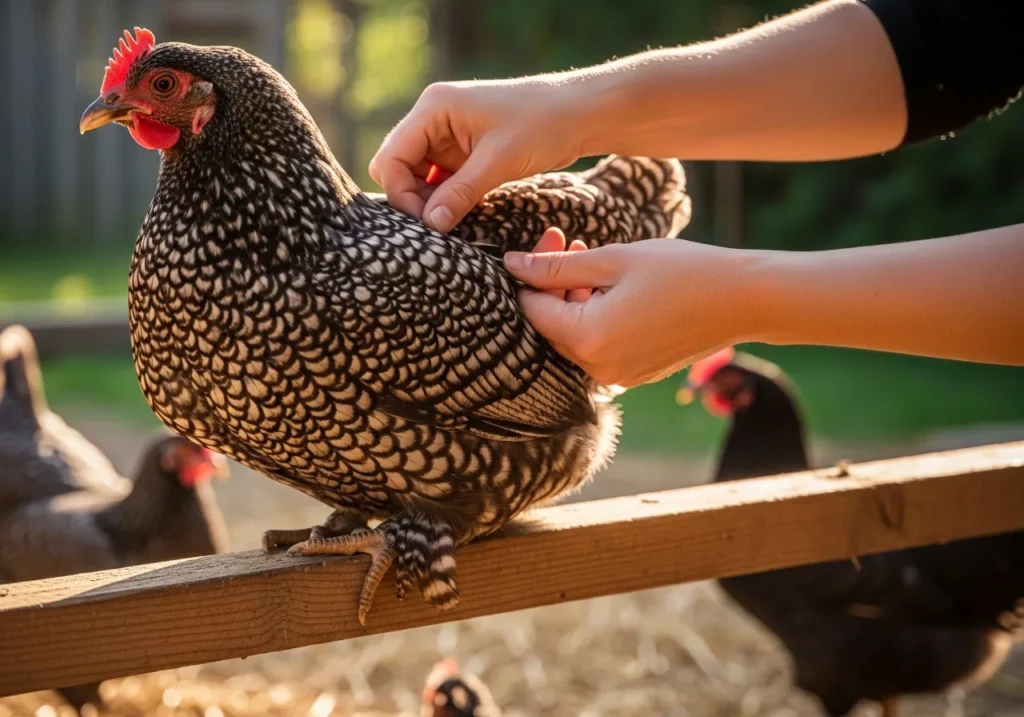
A first-time backyard chicken keeper’s checklist covers daily egg and behavior checks, weekly coop cleaning and parasite checks, and seasonal adjustments for molting, heat, and cold.
Daily
- Collect eggs and note any change in output
- Check feed and water levels
- Quick visual scan of the flock for anything unusual
- Confirm the coop is securely closed at night
Weekly
- Deeper coop clean — remove soiled bedding, check for parasites
- Inspect birds individually during handling for lumps, wounds, or foot issues
- Check coop and run for any new gaps a predator could exploit
Seasonal
- Increase protein slightly during molting season
- Add extra ventilation/shade in summer heat
- Check for frozen water and drafts in winter
See Signs Your Backyard Chicken Is Sick for the specific symptoms this routine helps catch early.
Daily Checks
Confirm all birds are up, active, and eating/drinking normally during morning or evening feeding rounds. Do a quick visual scan for any bird separated from the flock, showing obvious distress, or displaying unusual posture. Check that water is fresh, unfrozen, and adequately available, and collect eggs to prevent them from being damaged, eaten by the birds themselves, or attracting pests.
Weekly Checks
A closer, hands-on check of a sample of birds (or the whole flock if manageable) catches early signs of parasites, injury, or condition changes that quick daily glances might miss. Clean and refresh nesting box bedding, and do a general coop cleanliness assessment — accumulated droppings and damp bedding both increase disease and parasite risk the longer they’re left unaddressed.
Monthly and Seasonal Checks
A more thorough coop cleaning (full bedding change if not using deep litter method, structural check for any damage or predator entry points that have developed) belongs on a monthly rhythm. Seasonally, reassess ventilation and insulation needs, water heating equipment function ahead of winter, and shade or cooling needs ahead of summer heat.
Recordkeeping Worth Maintaining
Tracking egg production over time helps you notice gradual changes that might otherwise go unnoticed day to day, and a simple health log noting any treatments, unusual behavior, or flock changes creates a useful reference both for your own pattern recognition and for any vet consultation that becomes necessary.
Building Sustainable Long-Term Habits
A checklist that’s realistic for your actual schedule and flock size will get followed consistently; an overly elaborate system often gets abandoned within weeks. Start with the fundamentals covered here and add detail only where it genuinely serves your specific flock’s needs, building toward a routine that becomes second nature rather than a chore you’re constantly trying to remember.
Integrating Health Checks Into Egg Collection
Since egg collection already happens daily, use that same visit as your natural checkpoint for a quick flock scan — you’re already at the coop, already observing the birds, and adding a deliberate thirty-second health-focused glance costs essentially no extra time while meaningfully improving early detection odds.
Adjusting Checklist Intensity by Flock Size
A small flock of 3-5 birds allows genuinely individual attention to each bird regularly, while a larger flock may require a more systematic rotation to ensure every bird gets adequate individual observation over the course of a week rather than only the most visible or active birds receiving attention by default. Adapt your specific routine to genuinely cover your actual flock size, not just the birds that happen to be easiest to observe.
New Chick Integration Checklist
Introducing chicks or young pullets to an established flock needs its own dedicated checklist beyond routine daily care. Before introduction, confirm new birds have completed a 1-2 week quarantine period with no signs of illness, since even healthy-looking new birds can carry pathogens the existing flock has no resistance to. During integration, watch for normal pecking-order establishment (brief chasing, minor pecking) versus concerning aggression (drawing blood, one bird being relentlessly targeted with no letup) — the former usually resolves within days, the latter needs separation and a slower reintroduction. Provide multiple feeding and watering points during this period so lower-ranking new birds aren’t blocked from resources entirely, and keep a closer daily eye on the newcomers specifically until they’re clearly settled into the group’s routine.
Predator-Proofing Review Checklist
Beyond the daily “is the coop closed” check, a periodic deeper predator review catches problems before they become a loss. Walk the entire run perimeter checking for digging attempts at the base of fencing, and confirm any buried hardware cloth skirt is still intact and undisturbed. Check that all latches are the twist or carabiner-style predator-proof kind, since raccoons in particular can learn to operate simple hook latches. Inspect for any gaps that have opened up from settling, weather damage, or growth of nearby vegetation providing cover for approach, and reassess after any near-miss or actual predator incident in the area, since predator pressure in a given location tends to come in waves rather than a constant flat risk.
Broody Hen Checklist
A hen going broody (persistently sitting on eggs, plucking her own breast feathers, growling or puffing up when approached) needs a different short-term routine than the rest of the flock. Confirm daily whether you’re supporting the broodiness (fertile eggs, a safe separate space) or breaking it (removing eggs promptly, cooling the underside of the hen, temporary wire-bottom crate for a few days) based on your goals for that hen and flock. Broody hens eat and drink less than usual, so confirm daily that she’s still getting up periodically to eat, drink, and defecate even while spending most of her time on the nest, since prolonged complete fasting on the nest can become a genuine health issue.
Building an Emergency Supply Kit
A basic on-hand emergency kit saves critical time when something goes wrong outside normal vet-access hours: povidone-iodine or chlorhexidine for wound cleaning, a spare heat lamp and thermometer for chilled or injured birds needing warmth, electrolyte/vitamin powder for stressed or dehydrated birds, a carrier or spare crate for isolating a sick or injured bird away from the flock, and contact information for the nearest poultry-experienced vet already saved rather than searched for during an actual emergency. Check this kit’s contents every few months, since topical treatments expire and batteries in emergency lighting run down even when unused.
Molt-Season Checklist Adjustments
Beyond the general seasonal note on protein, a molting flock benefits from a more specific short-term routine. Reduce handling to the essentials during a heavy molt, since new pin feathers are sensitive and easily damaged or a source of pain if handled roughly. Watch for excessive picking at pin feathers from other flock members — some mild curiosity pecking at new feathers is normal, but persistent targeting of a molting bird’s sensitive areas can escalate into real injury and may need temporary separation. Continue the elevated-protein feed approach through the full molt period rather than stopping as soon as feathers start returning, since regrowth continues for several weeks after it becomes visually obvious.
Post-Storm and Extreme Weather Checklist
After any significant storm, heat wave, or cold snap, run a dedicated check beyond the normal daily routine: confirm the coop structure has no new damage, standing water hasn’t accumulated inside the run creating a damp, disease-favorable environment, and every bird is accounted for and behaving normally, since acute weather stress can trigger illness in birds that seemed fine beforehand. Extreme heat specifically warrants an immediate check for panting, wings held away from the body, or lethargy — early heat stress signs that are far easier to address with prompt shade and water than a bird that’s progressed to full heat stroke.
Annual Deep-Clean and Structural Review
Once a year, beyond routine monthly cleaning, do a full coop teardown clean: remove all bedding down to bare floor, scrub roosts and nesting boxes with a poultry-safe disinfectant, and inspect wood structures for rot or parasite harborage (mite populations can build up in cracks and joints over a full year even with regular surface cleaning). This is also the right time for a genuine structural review — checking roof condition, ventilation adequacy for the coming year, and whether the current setup still matches your flock’s actual size if it has grown or shrunk since the coop was last properly assessed.
Checklist for Multi-Species Backyard Setups
Keepers mixing chickens with ducks, geese, or other backyard poultry need to adapt the standard checklist rather than assume it transfers directly. Waterfowl mess up water sources far faster than chickens, so water checks may need to move from daily to multiple-times-daily in a mixed setup. Feed needs also diverge — waterfowl generally need niacin levels chicken feed doesn’t provide in adequate amounts, so a genuinely mixed flock’s feeding checklist should confirm the right feed or supplement combination is being used for every species present, not just defaulting to standard layer feed for everyone.
Keeping the Checklist Itself Up to Date
Revisit and adjust your personal checklist whenever your setup changes meaningfully — a new coop design, a change in climate if you relocate, or lessons learned from a close call. A checklist copied wholesale from a general guide like this one is a solid starting point, but the version that actually protects your specific flock long-term is the one you’ve refined around your real conditions over a season or two of use.
More Backyard & Farm Pets Guides
FAQ
A quick daily check plus a deeper clean weekly (or more often for smaller coops) keeps ammonia buildup and parasites in check.
Not as routinely as a dog or cat, but having a poultry-experienced vet identified in advance is valuable if an issue does come up.
This varies by region, but raccoons, foxes, hawks, and neighborhood dogs are common threats — a secure coop with a covered run reduces most of these risks significantly.
