
For most home aquariums under 40 gallons, a hang-on-back (HOB) filter offers the best balance of cost, ease of maintenance, and filtration power for beginners.
| Filter Type | Best For | Maintenance | Approx. Price Range |
|---|---|---|---|
| Hang-on-Back (HOB) | Tanks up to ~40 gal, beginners | Easy — rinse cartridge monthly | $ |
| Canister | Larger tanks, heavier bioloads | Moderate — full clean every 4-6 weeks | $$$ |
| Sponge Filter | Fry tanks, shrimp tanks, betta tanks | Easy — gentle flow, squeeze clean in tank water | $ |
| Internal Power Filter | Small to medium tanks | Easy | $ |

Hang-on-Back Filter
Simple to install, easy to maintain, and sized appropriately for most starter tanks up to 40 gallons.
Check Price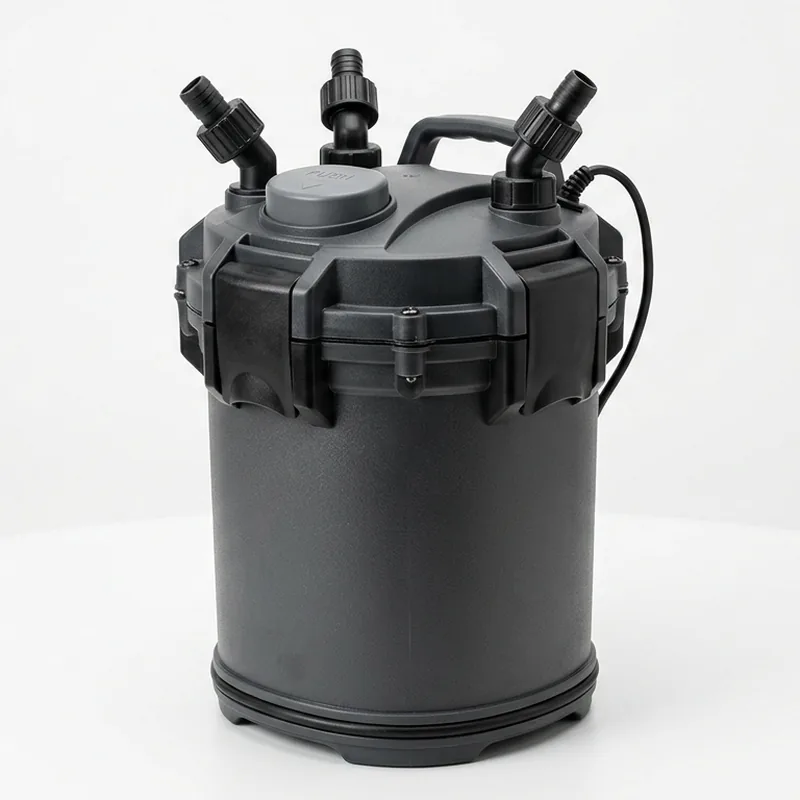
Canister Filter
Higher filtration capacity for tanks 40 gallons and up, or heavily stocked aquariums.
Check PriceWhat to Look For
Match filter flow rate to your tank size (roughly 4-6x tank volume per hour), and consider noise level if the tank is in a bedroom or living space.
Mechanical, Biological, and Chemical Filtration Explained
Mechanical filtration physically traps debris and particulates. Biological filtration — arguably the most important function — houses the beneficial bacteria that convert toxic ammonia into less harmful nitrate, and is what actually keeps a tank’s water chemistry safe long-term. Chemical filtration (activated carbon and similar media) removes dissolved impurities and odors but isn’t strictly necessary for a well-maintained tank with a good mechanical/biological setup and regular water changes.
Filter Types: Hang-on-Back, Canister, Sponge, and Internal
Hang-on-back (HOB) filters are the most common beginner choice — affordable, easy to install and maintain, and effective for small to medium tanks. Canister filters offer more filtration capacity and are quieter, making them a common upgrade for larger tanks or heavily stocked setups, at a higher price point. Sponge filters are gentle (good for fry or delicate species that can’t handle strong current) and excellent for biological filtration, though they offer minimal mechanical filtration alone. Internal filters sit inside the tank and work well for smaller setups but take up display space.
Sizing Your Filter to Your Tank
Filters are typically rated for a maximum tank size — as a general rule, choosing a filter rated for somewhat more than your actual tank volume provides a safety margin for heavier stocking or larger, messier fish, rather than running a filter at its exact rated maximum with no buffer.
Flow Rate Considerations for Different Species
Fast-water species (many danios, some tetras) tolerate or even prefer stronger current, while species from slow-moving or still natural habitats (bettas, many gouramis) can be stressed by excessive flow. Adjustable-flow filters or the addition of a spray bar to diffuse output are worth considering for tanks housing current-sensitive species.
Maintenance Requirements by Filter Type
HOB filters typically need cartridge changes on a schedule (though rinsing rather than fully replacing media preserves more beneficial bacteria than manufacturer-recommended full swaps). Canister filters need periodic full cleaning, typically every 4-6 weeks, which is more involved but less frequent than HOB media changes. Sponge filters need only occasional squeezing in removed tank water to clear debris, making them the lowest-maintenance option.
Filter Priming and Startup After Installation
Canister filters need proper priming (filling the housing with water before startup) to avoid running the pump dry, which can damage the impeller — follow manufacturer instructions closely on first setup. HOB and internal filters are generally more forgiving on startup but still benefit from a quick check that water is flowing correctly before walking away.
Common Filter-Buying Mistakes
- Undersizing the filter to save money. A filter rated for your exact tank size leaves no margin for heavier stocking or messier fish species.
- Fully replacing all filter media at once. This destroys the beneficial bacteria colony and can trigger a mini ammonia spike.
- Choosing a high-flow filter for current-sensitive species without a way to diffuse output. This can stress bettas and similar species unnecessarily.
The Bottom Line
Prioritize adequate biological filtration capacity sized above your tank’s minimum rating, match flow rate to your fish species’ natural habitat, and maintain by rinsing rather than fully replacing media to preserve the bacterial colony your tank depends on.
Cost and Energy Considerations
Filter running costs are modest individually but add up across a fishroom or multiple tanks — canister filters typically use more energy than comparable HOB filters due to their higher flow capacity, though the difference per tank is usually small relative to heating costs in a tropical setup. Factor replacement media costs into your ongoing budget, since these recurring costs vary meaningfully between filter types and brands.
DIY and Upgrade Options
Adding a sponge pre-filter to a canister or HOB intake protects the main filter from clogging with larger debris and extends time between full cleanings, a popular low-cost upgrade among more experienced keepers. Some keepers also add a secondary sponge filter alongside a primary filter purely for extra biological capacity in heavily stocked tanks, without the cost of upgrading to a larger primary unit.
Troubleshooting Common Filter Problems
Reduced flow usually indicates a clogged intake or media needing a rinse. Unusual noise often points to an impeller issue or an air bubble in the pump housing. A filter that’s stopped processing ammonia effectively despite normal flow may have lost too much beneficial bacteria from an overly aggressive cleaning — rinse media in tank water going forward, not tap water, to avoid repeating this mistake.
Filtration for Large or Heavily Stocked Tanks
Large tanks or heavily stocked setups sometimes benefit from running two filters rather than one oversized unit — this provides redundancy (if one fails or needs cleaning, the other maintains filtration) and can be quieter and more flexible than a single very large canister filter. This approach is increasingly common among experienced keepers managing bigger systems.
Filter Cycling and Media Colonization Time
A brand-new filter, even attached to an already-cycled tank, needs some time for its own media to fully colonize with beneficial bacteria — this is part of why replacing an entire filter at once (rather than upgrading gradually or seeding new media with established media) can cause a temporary mini-cycle even in an otherwise mature tank.
Matching Filter Choice to Aquascaping Goals
Canister filters, with their external placement and flexible inlet/outlet positioning, generally integrate more discreetly into a heavily aquascaped display tank than a hang-on-back filter’s visible in-tank components, worth considering if display aesthetics are a priority alongside pure filtration function.
Filter Maintenance Scheduling
Set calendar reminders for filter maintenance tasks (media rinsing, cartridge checks) rather than relying on remembering or waiting until performance visibly declines — a consistent maintenance schedule prevents the gradual performance decline that’s easy to miss day-to-day but adds up to a meaningfully less effective filter over months of neglect.
Filter Selection for Specialized Tank Setups
Planted tanks, breeding setups, and species-specific tanks (like those for bettas needing gentle flow) sometimes benefit from filter modifications or specific types beyond a generic community-tank recommendation — researching filtration specifically suited to your tank’s actual purpose, not just its size, results in a better long-term match.
Learning to Recognize a Well-Functioning Filter
A well-functioning filter runs quietly, maintains consistent flow, and correlates with stable water test results week to week — familiarizing yourself with what “normal” looks and sounds like for your specific filter makes it much easier to notice early signs of a developing problem before it affects water quality.
How Filter Choice Affects Long-Term Tank Stability
Beyond day-to-day filtration performance, filter choice affects how resilient your tank is to disruptions — a filter with a larger, more robust bacterial colony (generally correlating with more biological media capacity) recovers more quickly from a partial power outage or a brief equipment malfunction than a minimally sized filter running near its capacity limit. This resilience becomes increasingly valuable as your tank matures and represents a more significant investment in fish you’ve kept and grown attached to over time, making a somewhat larger initial filtration investment a reasonable form of risk management.
Evaluating Filter Performance Beyond Manufacturer Claims
Manufacturer flow-rate and capacity claims provide a useful starting comparison point but don’t always translate directly to real-world performance in your specific tank, which depends on stocking level, decor arrangement affecting water circulation, and how consistently you maintain the filter over time. Judging your filter primarily by your own tank’s actual water test results and fish health over the first few months, rather than by specification numbers alone, gives you a more reliable sense of whether it’s genuinely adequate for your specific setup.
Considering Filter Redundancy for Valued or Vulnerable Stock
For tanks housing particularly valued, delicate, or hard-to-replace fish, some keepers deliberately run slightly more filtration capacity than strictly necessary as a safety margin against unexpected equipment issues — this isn’t necessary for every tank, but it’s a reasonable consideration for setups where filter failure would carry higher consequences than a typical beginner community tank.
Understanding the Learning Curve of Filter Maintenance
Like most aquarium skills, filter maintenance becomes faster and more intuitive with repetition — a canister filter cleaning that takes considerable time and feels intimidating the first attempt typically becomes a quick, routine task within a few repetitions, and this normal learning curve is worth expecting rather than seeing as a sign you’ve chosen the wrong filter type.
More Fish & Aquarium Resources
FAQ
Hang-on-back (HOB) filters are the easiest to install and maintain for a first tank.
Rinse filter media monthly in tank water (not tap water) to preserve the beneficial bacteria living in it.
Yes — excessive flow can stress fish species that prefer calmer water, so filter output should be matched to both tank size and the species being kept.
