
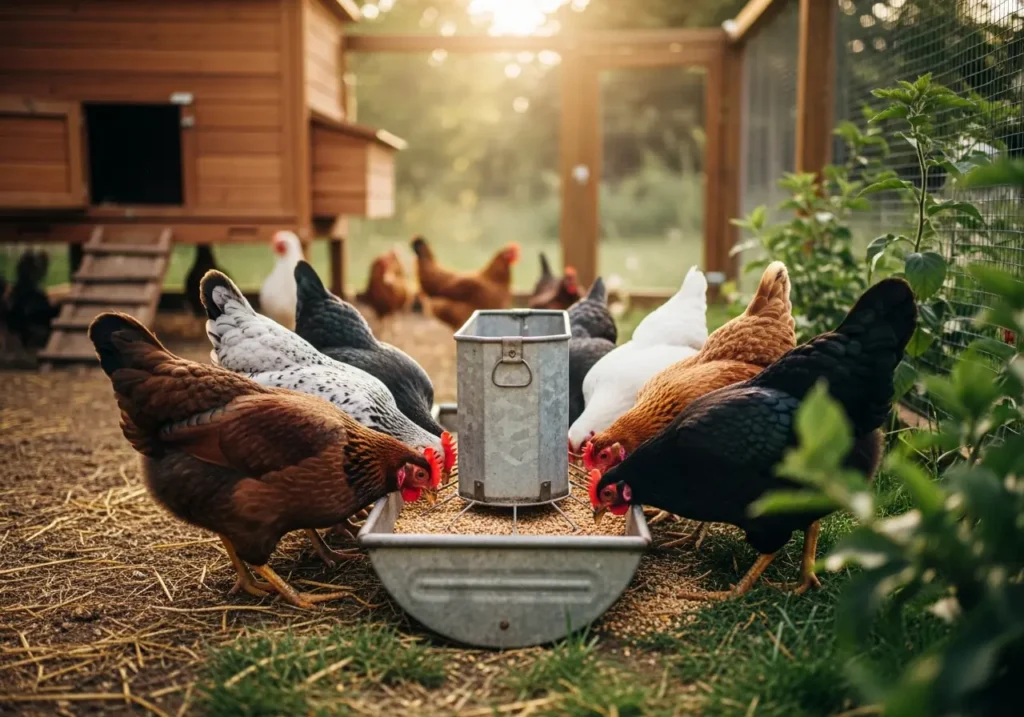
The best chicken feed matches your flock’s life stage and form preference — crumble or pellet layer feed for laying hens is the standard choice, with organic and non-GMO options available for owners who prioritize those factors.
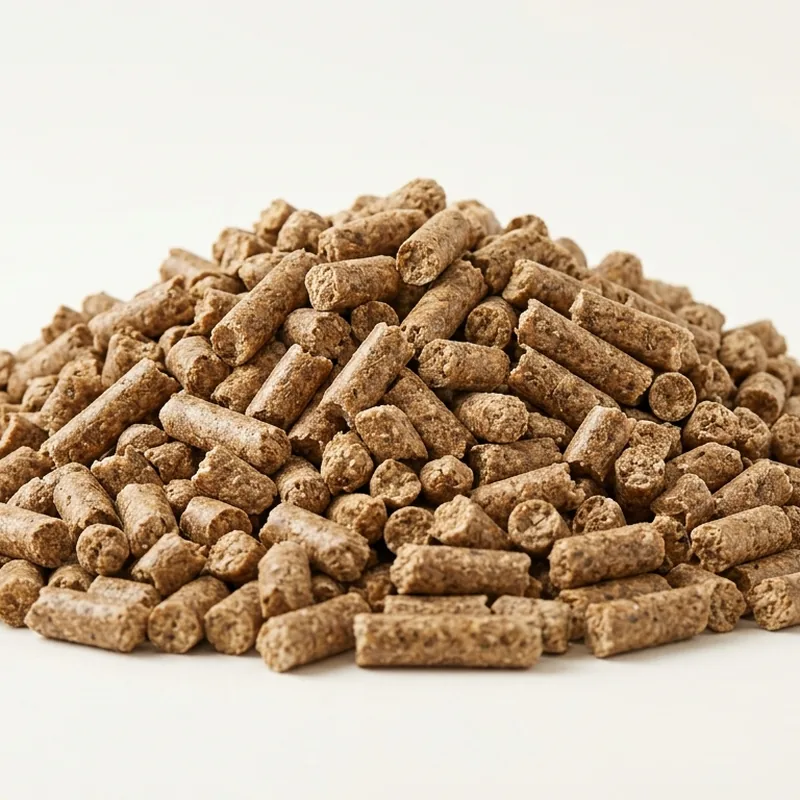
Standard Layer Pellet Feed
A reliable, complete nutritional base for laying hens, with pellets reducing waste compared to loose crumble.
Check Price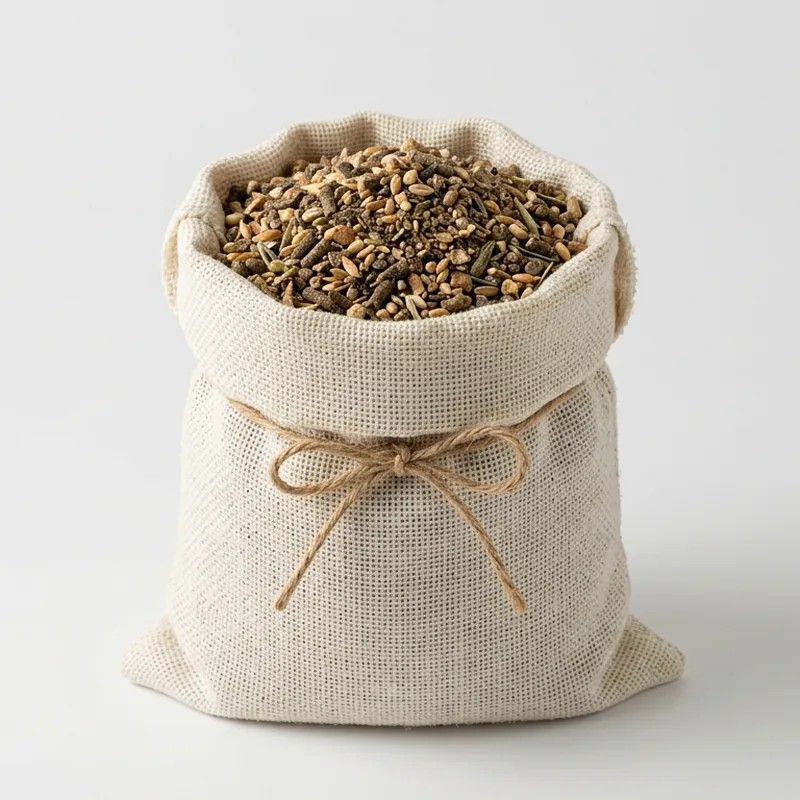
Organic Layer Crumble
Formulated without certain synthetic pesticides, for keepers who prioritize organic sourcing.
Check Price
Chick Starter/Grower Feed
Higher-protein formula for the growth phase before hens reach laying age.
Check PriceStorage Matters Too
Store feed in a rodent-proof, dry container, and buy in amounts you’ll use within about a month — feed loses nutritional potency over time and can attract pests if stored too long in an open bag.
Reading a Chicken Feed Label
Beyond the basic life-stage category, check the guaranteed analysis for protein and calcium percentages appropriate to your flock’s actual needs, and look at the ingredient list for named grains and protein sources rather than vague catch-all terms. Whole or minimally processed ingredients are generally preferable, though pelleted and crumble forms both work well nutritionally — the choice mostly comes down to reduced selective eating (pellets) versus easier eating for very young birds (crumble).
Medicated vs. Non-Medicated Starter Feed
Medicated starter feed contains a coccidiostat to help chicks build resistance to coccidiosis, a common and potentially serious parasitic disease in young birds. Whether to use medicated feed often depends on whether chicks were already vaccinated against coccidiosis at the hatchery — using both medicated feed and vaccination isn’t typically recommended, so check with wherever you sourced your chicks about their vaccination status before choosing.
Transitioning Between Feed Types
Gradual transitions, mixing old and new feed over 7-10 days, reduce digestive upset when switching brands or life-stage formulations, similar to feed transition practices in other animals. This matters less dramatically for chickens than for some other animals, but abrupt complete switches can still cause a temporary dip in feed intake as birds adjust to a new taste and texture.
Cost-Per-Egg Considerations
Premium feeds sometimes genuinely improve egg production or quality enough to offset their higher price through better output, while for other flocks a mid-tier quality feed produces essentially equivalent results at lower cost. Track your flock’s actual production against feed cost over a few months if you’re trying to optimize this rather than assuming price alone indicates value.
Feed Recommendations by Flock Purpose
A flock kept purely for eggs does well on a standard quality layer feed matched to the birds’ age. A flock raised partly or fully for meat typically needs higher-protein grower or meat-bird-specific formulations maintained longer than a laying flock would need. A mixed-purpose or pet-primary flock can often do well on an all-flock formulation with separate calcium offered for any laying hens present, simplifying feeding for genuinely varied household flocks.
What Experienced Keepers Prioritize
Beyond brand loyalty, experienced keepers consistently emphasize freshness (buying appropriately sized amounts, not excessive bulk that goes stale), consistency (not switching frequently without reason), and matching feed genuinely to flock composition and life stage over chasing the theoretically “best” brand on the market. These fundamentals matter more than most specific brand comparisons.
Grit: The Feed Component Most Owners Forget
Chickens have no teeth, so they rely on grit — small, hard particles held in the gizzard — to mechanically grind feed before digestion. Commercial layer feed does not include grit, and birds kept entirely on prepared feed with no access to bare soil or coarse sand still need it supplied separately, usually as insoluble granite grit sold specifically for poultry. Birds with regular access to a dirt run often pick up enough grit naturally, but confined or mostly-indoor flocks need a small dish of grit kept available at all times. Skipping grit doesn’t cause immediate visible problems, but it gradually reduces how efficiently birds extract nutrition from their feed, showing up later as slower growth or lower egg output that’s easy to misattribute to the feed itself rather than the missing grit.
Calcium Beyond the Feed Bag
Standard layer feed is formulated with calcium levels appropriate for hens actively laying, but flocks with roosters, non-laying pullets, or resting hens mixed in are better served by an all-flock feed with calcium offered separately in a side dish — feeding full layer-strength calcium to birds that aren’t laying can strain their kidneys over time. Crushed oyster shell is the standard free-choice calcium supplement, letting each bird regulate her own intake based on whether she’s actively producing eggs that week. Watch shell quality as an indirect calcium signal: thin, weak, or soft-shelled eggs are one of the more reliable early indicators that a flock’s calcium needs aren’t being met by its current feed and supplement combination, and usually resolve within a couple of weeks of correcting the supply.
Seasonal Feed Adjustments
Feed needs shift meaningfully with the seasons even on a feed that stays nutritionally identical year-round. In cold weather, chickens burn noticeably more energy maintaining body temperature, and many keepers offer a bit of extra scratch grain or a warm mash in the evening to give birds additional calories going into overnight cold — not as a feed replacement, but as a supplement on top of their normal ration. In hot weather, appetite typically drops and egg production can dip, so ensuring feed stays palatable and fresh (not sitting out going stale in heat) and prioritizing hydration matters more than adjusting the feed formulation itself. Molting season is another period worth planning for: regrowing feathers is protein-intensive, and temporarily switching to a higher-protein feed (or a feather-fix supplement) during a heavy molt often shortens the process and keeps birds more comfortable.
Budgeting Feed Costs by Flock Size
A single laying hen eats roughly a quarter-pound of feed per day on average, meaning a standard 50-pound bag lasts one hen around seven months but disappears in under three weeks for a flock of ten. Buying in bulk (40-50 lb bags rather than smaller ones) meaningfully lowers the per-pound cost for anyone keeping more than a couple of birds, provided storage can keep the larger quantity dry and pest-free within the roughly one-month freshness window. For keepers weighing premium versus budget feed, running the actual numbers on your specific flock size over a season is more useful than general advice — the per-bird cost difference between tiers is often smaller than it looks on the shelf price alone, while for very small flocks it may not justify the switch either way.
Switching Feed Brands Without Tanking Egg Production
A sudden brand switch is one of the more common, avoidable causes of a temporary dip in egg output. Hens can be surprisingly particular about feed taste and texture, and an abrupt change sometimes leads a flock to eat less for several days simply because the new feed is unfamiliar, not because anything is nutritionally wrong with it. Mixing the new feed in gradually — a quarter of the new bag blended into the old for a few days, then half, then mostly new — avoids this dip almost entirely and is worth doing even when switching between two reputable, similar-quality feeds. If a flock’s production does dip after a switch, patience for one to two weeks resolves it in the large majority of cases without any further intervention needed.
Free-Range and Pasture Access: How Much It Actually Offsets Feed
Hens with genuine pasture or free-range access will forage a meaningful portion of their own diet — bugs, greens, and grit among it — which can modestly reduce how much prepared feed a flock goes through, though it rarely replaces more than a fraction of total intake for a productive laying flock. The bigger effect of good foraging access is usually on egg yolk color and, anecdotally, flavor, rather than a dramatic feed-cost reduction. It’s also not a substitute for a nutritionally complete feed: foraged food varies too much in composition day to day to reliably cover a laying hen’s specific protein and calcium needs on its own, so free-ranging flocks still need full access to a proper layer feed alongside whatever they pick up outside.
Water Quality Matters As Much As Feed Quality
Even excellent feed underperforms if water access is inconsistent — chickens drink noticeably more than most new keepers expect, and interrupted or dirty water access reduces feed intake right along with it, since eating dry feed without adequate water slows digestion and discourages appetite. Algae buildup in warm weather and frozen waterers in cold weather are the two most common failure points; a simple daily check keeps both from becoming an issue that quietly undermines an otherwise well-chosen feed.
When to Reassess Your Feed Choice
Revisit your feed decision whenever a flock’s composition changes significantly — adding chicks, retiring older hens to an all-flock diet, or introducing a rooster — rather than assuming the original feed choice still fits. A yearly check-in against your flock’s actual egg output, feather condition, and body weight is enough for most keepers to catch a mismatch before it becomes a real problem.
More Backyard & Farm Pets Resources
FAQ
Both are nutritionally similar; it mostly comes down to preference and reduced waste — pellets tend to get scattered and wasted less than crumble.
It's a personal preference rather than a health necessity for the birds — standard commercial feed is nutritionally complete and safe.
Buy an amount you'll use within about a month to keep feed fresh — feed can lose nutritional value and attract pests if stored too long.
