
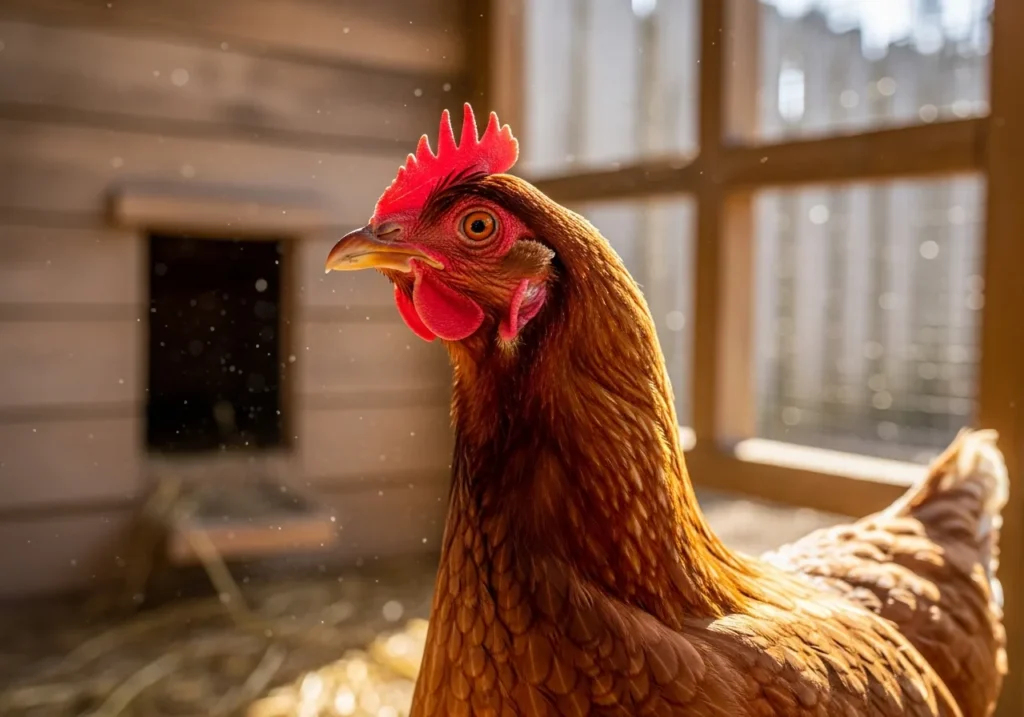
Choosing the right backyard chickens means checking local zoning rules first, then matching breed temperament and climate tolerance to your goals, and being honest about the space and daily time a flock actually requires.
Step 1: Check Zoning Rules
Flock size limits, rooster bans, and setback requirements (how far a coop must be from property lines) vary by city and county. This is the first filter — no point choosing breeds before confirming what’s actually allowed where you live.
Step 2: Match Breed to Climate and Goals
Cold climates favor heavier-feathered, cold-hardy breeds; hot climates favor heat-tolerant ones. Prioritizing eggs points toward production breeds; prioritizing a calm, pet-like flock points toward docile dual-purpose breeds like Orpingtons.
Step 3: Be Honest About Space and Time
A general guideline is 4 square feet per bird in the coop and 8–10 in the run — cramming too many birds into too little space causes stress and health issues. Daily care takes 10–20 minutes; weekly coop cleaning takes longer.
Step 4: Decide on Chicks or Started Birds
Day-old chicks need careful brooding and more hands-on early care; started pullets are closer to laying age and skip the more delicate early stage, at a higher upfront cost.
Step 5: Source Responsibly
A reputable local farm store, breeder, or established hatchery gives a clearer picture of bird health and breed accuracy than an impulse buy.
See our Best Backyard & Farm Pets for Beginners guide for specific breed recommendations for a first flock.
Defining Your Actual Goals First
Are you primarily motivated by egg production, companionship, a mix of both, or interest in showing/breeding for specific traits? Your actual priority should meaningfully shape breed selection — a keeper purely focused on maximum egg output makes different breed choices than one primarily interested in a calm, personable flock that happens to also lay eggs.
Matching Breed to Your Climate
Revisit the climate considerations covered in the types and breeds guide when making your final selection — a breed poorly suited to your regional climate extremes will likely struggle regardless of how appealing its other characteristics seem, making climate fit a genuinely important practical filter, not a minor detail.
Sourcing From Reputable Hatcheries or Breeders
Established hatcheries and local breeders with good reputations typically offer healthier stock, more accurate breed information, and sometimes vaccination against common diseases like Marek’s disease, compared to less accountable sources. Research reviews and ask other local keepers for recommendations before ordering or purchasing, rather than choosing purely based on price or convenience.
Considering Flock Composition and Compatibility
If adding to an existing flock, consider compatibility — introducing new birds requires a gradual, careful process (often involving a period of visual-only contact before physical integration) to avoid serious pecking-order conflicts. Researching proper flock integration technique before adding new birds, rather than simply placing them together and hoping for the best, prevents injury and significant stress for both new and existing birds.
Buying in Small Numbers vs. Minimum Hatchery Orders
Many hatcheries have minimum order quantities (sometimes 15-25 chicks) for shipping, since chicks ship better in groups that help maintain body heat — a genuine consideration if you only want a small flock. Local farm stores or breeders offering individual or small-quantity sales are often a better fit for keepers wanting just 3-6 birds, avoiding the need to either exceed your intended flock size or find homes for extra chicks from a minimum hatchery order.
Straight-Run vs. Sexed Chicks
Sexed chicks (professionally identified as female, with reasonable but not perfect accuracy) let you avoid unwanted roosters if that’s a priority, typically at a price premium over straight-run (unsexed) chicks, which come as a random mix. If your local regulations prohibit roosters, sexed pullets are generally the safer choice despite the higher cost, avoiding the situation of needing to re-home an unexpected rooster later.
Heritage Breeds vs. Modern Hybrids
Heritage breeds are older, standardized breeds that reproduce true to type and are generally slower-growing and longer-lived, while modern hybrids (like many commercial production layers) are bred specifically for high early egg output, often at the cost of a shorter productive laying lifespan and less predictable offspring if you later want to breed your own replacements. Keepers interested in a longer-term flock with birds that remain useful well past peak laying years, or who want the option of breeding true, often lean toward heritage breeds, while those prioritizing maximum egg output in the first couple of years and comfortable replacing stock periodically may prefer hybrids.
Noise Level — An Underrated Selection Factor
Hens are considerably quieter than roosters overall, but noise level still varies meaningfully by breed, and some breeds are notably more vocal than others even among hens-only flocks. This matters more than many first-time keepers anticipate, particularly in suburban settings with close neighbors — researching a specific breed’s typical noise level, not just its egg output and temperament, is worth doing if maintaining good relations with immediate neighbors is a genuine practical concern for your situation.
Long-Term Commitment and Lifespan Expectations
Backyard chickens commonly live 5-10 years depending on breed and care, though egg production typically declines significantly after the first 2-3 peak years — meaning most keepers end up caring for birds well past their most productive laying period if they intend to keep them for their natural lifespan rather than cycling stock. Deciding upfront whether you’re committed to this full lifespan, including years of reduced egg output, versus planning to rehome or replace birds after peak production, is a genuinely important decision to make consciously rather than by default once you’re already emotionally attached to established birds.
Evaluating Individual Bird Health Before You Buy
Whether buying chicks or started birds, check for bright, alert eyes, clean nostrils and vent area, smooth (not ruffled or puffed) feathers, active movement, and normal breathing without any visible respiratory distress before purchasing. Avoid any bird showing lethargy, diarrhea, visible parasites, or being kept in an overcrowded or visibly unsanitary environment at the point of sale, since these are red flags for the health of not just that individual bird but potentially the whole source flock it came from.
Considering Allergies and Family Sensitivities
While chicken allergies specifically are less commonly discussed than cat or dog allergies, some people do have sensitivities to feather dander, and certain breeds with heavier feathering may produce more dander than smoother-feathered ones — worth a brief consideration if a household member has a history of animal-related allergic reactions, though this is a genuinely minor factor for most families compared to the space, zoning, and time commitment questions covered elsewhere.
Dual-Purpose vs. Egg-Only vs. Meat Breed Priorities
Pure egg-laying breeds are bred specifically to maximize consistent egg output, dual-purpose breeds balance reasonable egg production with a body size and temperament suited to also being raised for meat if that’s part of your goals, and dedicated meat breeds prioritize rapid growth over egg output or longevity. Most backyard keepers focused purely on eggs and companionship do best with dual-purpose or egg-focused breeds rather than meat-specific breeds, which are generally bred for a short, rapid-growth lifespan not well suited to long-term backyard keeping as pets or layers.
Getting a Second Opinion Before Committing
Talking with local keepers, a regional backyard poultry club, or an agricultural extension office about your specific climate, space, and goals before finalizing your breed choice often surfaces genuinely useful regional considerations that generic breed guides can’t fully account for — local predator pressure, climate extremes, or even locally common health issues in certain breeds are the kind of detail experienced local sources know firsthand that broader guides necessarily generalize past.
Reassessing Your Choice as Your Flock Matures
It’s entirely normal to learn things about your genuinely preferred breed traits only after real hands-on experience with your first flock — a keeper might discover they value calm temperament far more than they initially realized, or that a breed marketed as cold-hardy still needs more winter support than expected in their specific climate. Treating your first breed choice as a genuine starting point rather than a permanent, unchangeable decision, and being willing to adjust future additions to your flock based on real experience, is how most experienced keepers actually arrive at their long-term preferred breeds over time.
A Practical Decision Checklist
Before finalizing your choice, confirm you’ve genuinely addressed each of these: local zoning and any HOA rules, an honest space and time assessment for your intended flock size, a breed match to both your climate and your actual goals (eggs, companionship, or both), a sourcing plan from a reputable hatchery, breeder, or farm store, and a realistic understanding of the multi-year commitment involved including years of reduced production past peak laying age. Working through this list deliberately, rather than choosing breeds based on appearance alone, is what separates keepers who end up genuinely satisfied with their first flock from those who discover a mismatch only after birds have already arrived.
One Last Practical Tip
If you remain genuinely torn between two or three breeds after working through every consideration above, choosing a small, well-sourced sample of each for your first flock (rather than committing entirely to one) is a reasonable way to gather real, direct comparison experience before scaling up or narrowing your preference for future additions.
More Backyard & Farm Pets Guides
FAQ
Local zoning laws first — flock size limits, rooster restrictions, and setback requirements from property lines all vary by location.
Generally 10–20 minutes a day for feeding, watering, egg collection, and a quick health check, plus more time weekly for coop cleaning.
Local farm stores or breeders let you see the birds' condition directly; mail-order hatcheries offer wider breed selection but involve shipping stress for day-old chicks.
