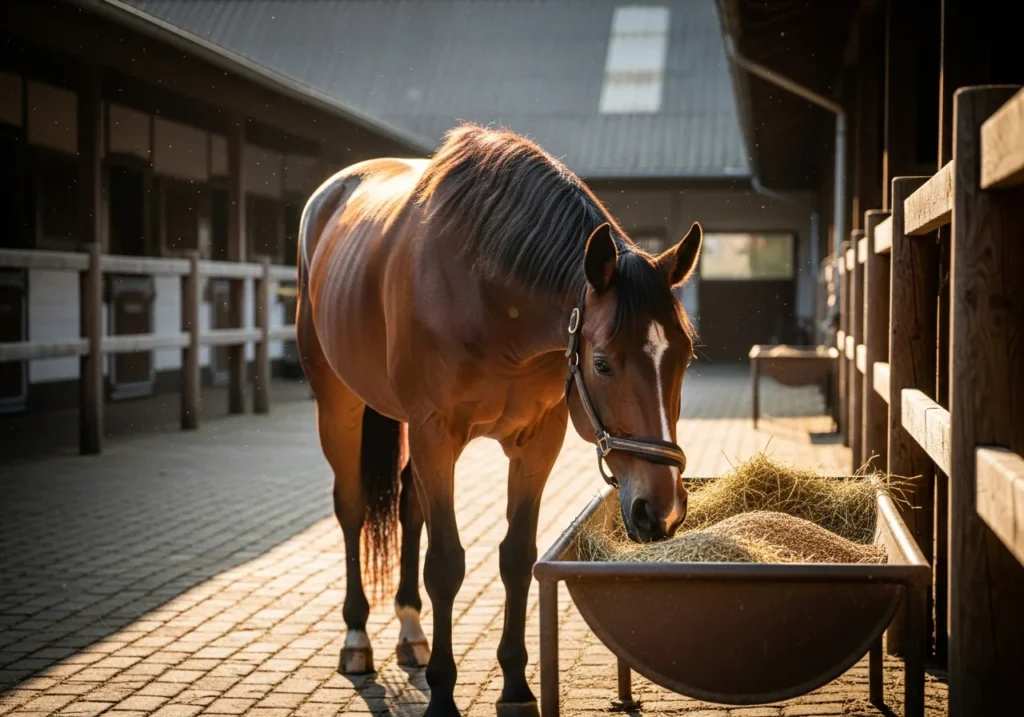
Most horses need 1.5–2% of their body weight in forage daily — about 15–20 pounds of hay for a 1,000-pound horse — plus grain only if workload or condition requires extra calories.
Working Out Forage Amount
Start with body weight (a weight tape gives a reasonable estimate if you don’t have a scale), then calculate 1.5–2% of that number in pounds of hay per day. A horse in harder work, cold weather, or struggling to maintain weight may need the higher end of that range or more; an easy keeper on good pasture may need less supplemental hay.
When Grain Is Actually Needed
If a horse can’t maintain a healthy weight on forage alone — visible ribs, poor topline, dull coat — additional calories from grain or a higher-fat feed may be needed. Horses in light trail or pleasure riding often don’t need grain at all if forage quality is good.
Signs You’re Overfeeding
A cresty neck, fat pads near the tailhead, and general obesity are signs of overfeeding, and carry real health risk — overweight horses are at higher risk for laminitis and metabolic disease. A body condition score of 5 out of 9 is generally the target for most horses.
Signs You’re Underfeeding
Visible ribs and spine, a sunken look behind the shoulders, and low energy are signs a horse needs more calories — either more forage, added fat, or a higher-calorie feed, depending on the cause.
For a deeper look at forage quality and feed types, see our full Horses Nutrition & Feeding Guide.
FAQ
Ribs that are easily visible with no fat cover, a prominent spine, and a sunken area behind the shoulder are signs of being underweight — a body condition score chart helps standardize the assessment.
Yes — excess grain, especially high-starch feed, is linked to weight gain, laminitis risk, and behavioral issues like excitability. Grain should match actual calorie need, not habit.
Often yes — horses need more forage in cold weather to generate body heat through digestion, and less rich grass access in spring if prone to metabolic issues.
