
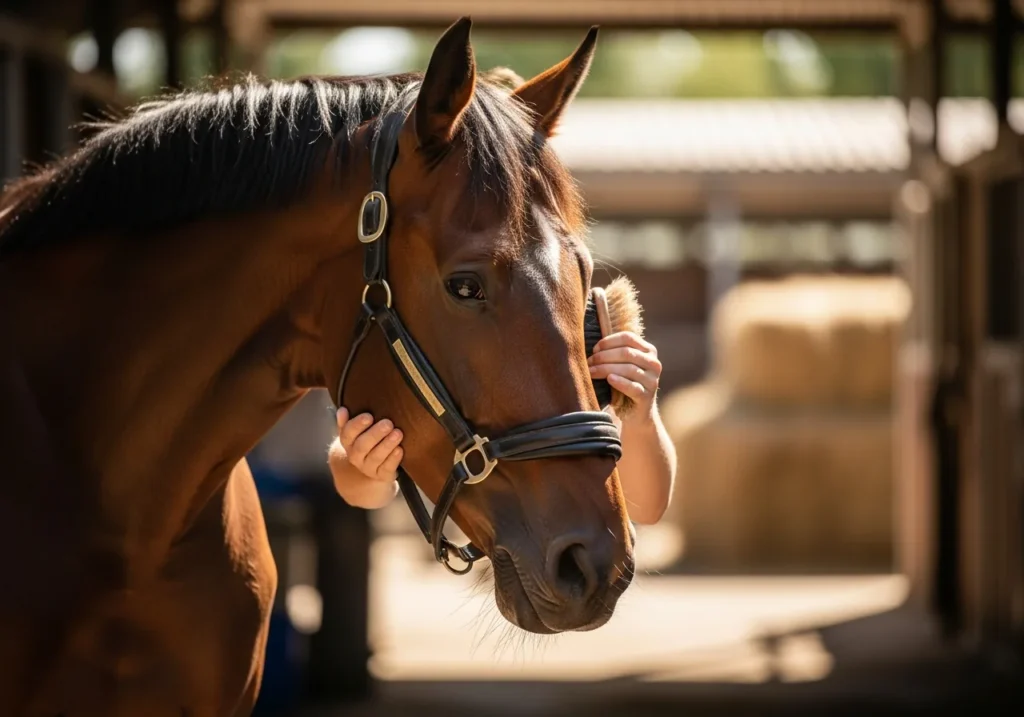
A first-time horse owner’s health checklist covers daily feed and movement checks, weekly grooming and hoof checks, and scheduled farrier, dental, and vaccination visits throughout the year.
Daily
- Confirm normal appetite and water intake
- Check manure output looks normal
- Watch movement for any sign of lameness
- Quick visual scan for cuts, swelling, or new lumps
Weekly
- Full grooming session (also doubles as a skin/coat check)
- Pick and inspect hooves for thrush or cracking
- Check blanket or fly mask fit if in use
Every 6–8 Weeks
- Farrier visit for trim or reset
1–2 Times a Year
- Vet wellness exam and vaccinations
- Dental exam and float if needed
- Fecal egg count to guide deworming
Building this routine early makes it far easier to notice when something’s off — see Signs Your Horse Is Sick for the specific red flags this checklist is designed to catch.
Daily Checks (Under Five Minutes)
Watch the horse move to its feed and check that it’s eating normally, glance over the body for new cuts, swelling, or heat in the legs, and do a quick manure check for normal consistency and volume. This daily routine, done while feeding or during a normal barn visit, catches most emerging issues early.
Weekly Checks
A more thorough grooming session once a week is a good opportunity to run hands over the whole body feeling for new lumps, sensitivity, or swelling that a quick daily glance might miss, and to pick and inspect all four hooves for thrush, cracks, or embedded stones.
Monthly and Seasonal Checks
Body condition scoring once a month helps catch slow weight changes before they become significant. Seasonal checks include reviewing vaccination and deworming schedules, assessing blanket needs as weather shifts, and adjusting fly control measures for warm months.
Annual and Semi-Annual Care
Dental floating (at least annually, sometimes twice yearly for younger or older horses), core vaccinations, and a general wellness exam from your vet round out the checklist. Keeping a simple written or app-based log of these dates prevents the common mistake of losing track of when the last farrier or vet visit actually happened.
Printable-Style Quick Reference
Daily: check appetite, manure, general demeanor, and give a quick visual scan for new injuries. Weekly: full-body hands-on check during grooming, all four hooves picked and inspected. Monthly: body condition score, review of upcoming vaccination/deworming/farrier dates. Seasonally: blanket and fly control needs, pasture and hay quality review, adjust feed for temperature and workload changes.
Setting Up a Simple Health Log
A notebook or basic app tracking vaccination dates, deworming (with fecal egg count results if used), farrier visits, and any notable health events creates a reference that’s genuinely useful during vet visits and catches patterns — recurring issues around the same season, for instance — that might otherwise go unnoticed.
Building a Relationship With Your Vet Before You Need One
An annual wellness exam isn’t just a formality — it establishes your horse’s individual baseline with a vet who will then have context if an emergency call comes in later. Waiting until an emergency to establish a vet relationship means starting from zero exactly when time matters most.
Emergency Preparedness
Keep your vet’s number, an emergency backup vet’s number, and basic first aid supplies somewhere accessible to anyone who might be caring for the horse in your absence — not just saved in your own phone. A clear, written emergency plan removes hesitation and confusion in a genuinely urgent moment.
Boarding Barn Coordination
If your horse is boarded, confirm exactly what daily health monitoring barn staff actually provide versus what falls to you during visits — assumptions about “someone’s watching” can leave real gaps. A brief, clear conversation with barn management about expectations avoids both redundant effort and dangerous gaps in care.
Adapting the Checklist to Your Horse
A senior horse, one with a known chronic condition, or one recovering from illness or injury may need more frequent checks than this general checklist outlines. Adjust the frequency and depth of monitoring to your individual horse’s actual risk factors rather than treating every horse identically.
A Sample Weekly Care Calendar
Monday: full grooming and hands-on body check. Wednesday: hoof pick and inspection during a routine visit. Friday: body condition glance and tack check before weekend riding. This kind of simple, repeatable rhythm — attached to days you’re already at the barn — makes consistent monitoring far more likely to actually happen than a vague intention to “check on things regularly.”
Involving the Whole Care Team
Share your checklist and any health log with your farrier and vet at routine visits — they often notice things during their specialized work (a farrier spotting early thrush, a vet noticing a subtle gait change during a routine exam) that complement what an owner catches day to day. Treating your care team as active observers, not just service providers, genuinely improves outcomes.
Adapting This Checklist as You Gain Experience
A brand-new owner may want to follow this checklist closely and even write out each step initially. Experienced owners often internalize most of it into an intuitive daily routine that takes just a few minutes without conscious checklist-following. Both approaches work — the goal is consistent observation, not rigid adherence to a specific format.
Using Technology to Support the Routine
Simple apps designed for horse health tracking, or even a basic shared calendar or notes app, can handle reminders for recurring care (farrier, vet, deworming) more reliably than memory alone, especially across a busy season or if care responsibilities are shared among multiple people.
A Complete Sample Checklist You Can Adapt
Daily: appetite check, manure check, visual scan for injury, general demeanor. Weekly: full hands-on body check during grooming, hoof pick and inspection all four feet, tack condition glance. Monthly: body condition score, review upcoming care dates (farrier, vet, deworming). Seasonally: blanket/fly control needs, pasture and hay quality reassessment, feed adjustment for workload or weather changes. Annually: full vet wellness exam, core vaccinations, dental floating, review of insurance or emergency fund adequacy.
Training New Caretakers on Your Checklist
If someone else will ever care for your horse — a friend, a pet-sitter for horses, a new boarding barn — walk them through your specific checklist and your horse’s individual quirks and normal baseline in person, not just via a written note. Horses respond to familiar handling, and a caretaker who understands what’s actually normal for your specific horse will catch problems far more reliably than one working from a generic list alone.
Common Reasons Checklists Fall Apart in Practice
Busy schedules, assuming someone else is handling a task, and simple forgetfulness are the most common reasons even well-intentioned care checklists slip. Attaching checklist items to existing habits — checking hooves while already at the barn for feeding, for instance — makes consistency far more achievable than treating care tasks as separate obligations competing for time.
Reviewing and Updating Your Checklist Over Time
As your horse ages or its health needs change, revisit and adjust your personal checklist rather than treating it as fixed forever. A young, healthy horse and a senior horse with a chronic condition genuinely warrant different monitoring intensity.
Putting the Checklist Into Practice From Day One
New owners benefit most from starting this checklist immediately, even before they feel fully confident handling every item on it — competence builds through repetition, not by waiting until you feel ready. Ask your vet or an experienced horse friend to walk through the hands-on items with you the first few times if you’re unsure, then continue independently once the routine feels familiar.
One More Consideration: Keeping It Sustainable
A checklist that’s too elaborate to realistically maintain long-term does less good than a simpler one you’ll actually follow consistently. Start with the basics and add detail only as it becomes genuinely useful to your specific situation, rather than adopting an exhaustive system you’ll abandon within a month.
One Final Practical Tip
Keep a laminated or digital copy of this checklist somewhere genuinely accessible — a barn bulletin board, your phone’s notes app, or a folder in your tack trunk — rather than only in memory. On a stressful or busy day, having it physically or digitally at hand makes it far more likely the routine actually happens instead of being skipped just once, which easily becomes a habit of skipping.
Why This Routine Pays Off Over Years
Owners who maintain consistent daily and weekly observation routines over years of ownership report catching far more issues early, spending less on emergency care, and having horses that stay sound and healthy longer. The five minutes a day this checklist asks for is a genuinely small investment against the alternative of missing something that becomes a much larger problem.
A Closing Thought
Consistency beats intensity here — a simple routine followed reliably every day outperforms an elaborate system followed sporadically.
Adapting the Checklist for Boarded Horses
If your horse is boarded rather than kept at home, clarify exactly which checklist items the barn staff handles versus what remains your responsibility as the owner — assumptions about who’s checking water, watching for lameness, or tracking vaccination schedules can create dangerous gaps when both parties assume the other is covering it.
More Horses Guides
FAQ
Appetite, manure output, general alertness, and soundness when moving are the quickest daily indicators of a problem.
Based on a fecal egg count test rather than a fixed schedule — your vet can advise on frequency based on results and your region.
Equine insurance exists and can help offset the cost of colic surgery or major injuries, which can run into the thousands — worth researching before you need it.
