

A basking bulb paired with a digital thermostat is the standard, safest setup for creating a proper temperature gradient in most reptile enclosures.
| Type | Best For | Notes |
|---|---|---|
| Basking Bulb | Diurnal species needing visible light + heat | Pair with a thermostat |
| Ceramic Heat Emitter | Nocturnal species, night heating | No light output, heat only |

Basking Bulb + Digital Thermostat
Creates a reliable, safe basking spot without risking overheating.
Check PriceWhy Wattage Alone Doesn’t Tell the Full Story
Two heat lamps with identical wattage can produce meaningfully different basking surface temperatures depending on bulb type, fixture design, and distance from the basking spot — this is why relying on wattage alone to guess at temperature is unreliable. Always verify actual surface temperature with an independent digital thermometer at the basking spot itself, adjusting bulb distance or wattage as needed to hit your species’ specific target range, rather than trusting a general “this wattage works for this size tank” rule of thumb.
Ceramic Heat Emitters vs. Basking Bulbs
Basking bulbs provide both heat and visible light, useful for diurnal species that benefit from a clear light cycle. Ceramic heat emitters provide heat without light, useful for nighttime heating without disrupting a reptile’s natural day-night cycle, or for nocturnal species that don’t need daytime basking light at all. Many keepers use a combination — a daytime basking bulb and a nighttime ceramic emitter if the ambient room temperature drops meaningfully after dark.
Under-Tank Heaters: Where They Do and Don’t Work
Under-tank heating pads suit species that seek belly heat from below, like many burrowing or ground-dwelling species, but aren’t a substitute for overhead basking heat for species that naturally bask under sun exposure. Under-tank heaters should always run through a thermostat as well — direct contact burns from unregulated under-tank heaters are a genuine, documented risk, particularly for animals that rest directly on the heated substrate for extended periods.
The Non-Negotiable Thermostat
Regardless of which heat source you choose, pairing it with a thermostat is the single most important safety step in reptile heating — it’s the difference between a heat source that maintains a safe, consistent range and one that can climb to genuinely dangerous temperatures if left unregulated, especially overnight when no one is monitoring the enclosure. This isn’t an optional upgrade; treat it as part of the core heating purchase, not an accessory.
Placement and Fixture Safety
Mount heat lamps securely with fixtures rated for the bulb wattage used, position them so the animal cannot directly contact the bulb or fixture (a genuine burn risk with climbing species in particular), and keep flammable materials like paper substrate or decor at a safe distance from the heat source. Check fixtures periodically for wear, loose connections, or damage, especially in humid tropical setups where moisture exposure can affect electrical components over time.
Signs Your Heating Setup Needs Adjustment
A reptile that constantly presses against the glass near the heat source may be too cold; one that avoids the basking area entirely or shows signs of overheating (open-mouth gaping in species prone to this, unusual restlessness) may be too hot. Regular thermometer checks catch these issues before behavior alone would reveal them, since some species mask discomfort effectively, similar to how many prey animals hide illness.
Bulb Lifespan and Replacement
Heat bulbs, unlike UVB bulbs, generally maintain consistent heat output for as long as they physically function — but check periodically for any dimming or flickering that suggests a bulb is nearing failure, and always keep a spare on hand, since a sudden heat-source failure, particularly overnight, can quickly become dangerous for temperature-sensitive species.
Matching Heat Source to Species Behavior
Desert species like bearded dragons and leopard geckos need a strong, focused basking spot significantly warmer than the rest of the enclosure, mimicking direct sun exposure on rock or sand. Tropical species often need a gentler, more ambient heat gradient without as extreme a hot spot, paired with the higher humidity their environment naturally provides. Nocturnal species may need minimal or no daytime basking heat but still require appropriate nighttime temperature maintenance through ceramic heat emitters or similar non-light-emitting sources.
Backup Heating for Power Outages
A brief power outage can be genuinely dangerous for temperature-sensitive reptiles, especially in colder climates or seasons. Battery-powered or chemical hand-warmer-style backup heat sources, kept on hand for genuine emergencies, and a basic plan (moving the enclosure to a warmer room, insulating with towels) can bridge a gap until power returns. This is worth thinking through before an outage happens, not improvised during one.
Common Heating Mistakes
- Skipping the thermostat. The single most preventable cause of heat-related injury in captive reptiles.
- Guessing temperature instead of measuring it. A heat lamp’s apparent brightness doesn’t reliably indicate actual surface temperature.
- Using the wrong heat source type for the species’ natural behavior. A burrowing species needs different heat delivery than a basking species.
- Placing the heat source where the animal can directly contact it. This is a genuine, documented burn risk, especially for climbing species.
- Not having a backup plan for power outages or bulb failure. Temperature-sensitive species can decline quickly without consistent heat.
Combining Heat With Humidity Needs
Heat and humidity interact — a strong basking bulb can dry out a tropical enclosure faster than expected, requiring more frequent misting or a larger water feature to maintain target humidity alongside the necessary heat. Desert setups have the opposite consideration, needing to maintain low humidity even with heating equipment running continuously. Monitor both temperature and humidity together with a combo thermometer/hygrometer rather than treating them as entirely separate systems.
Top Heating Setup Picks

Digital Proportional Thermostat
Regulates any heat source to a safe, consistent range — the foundational safety piece of any reptile heating setup.
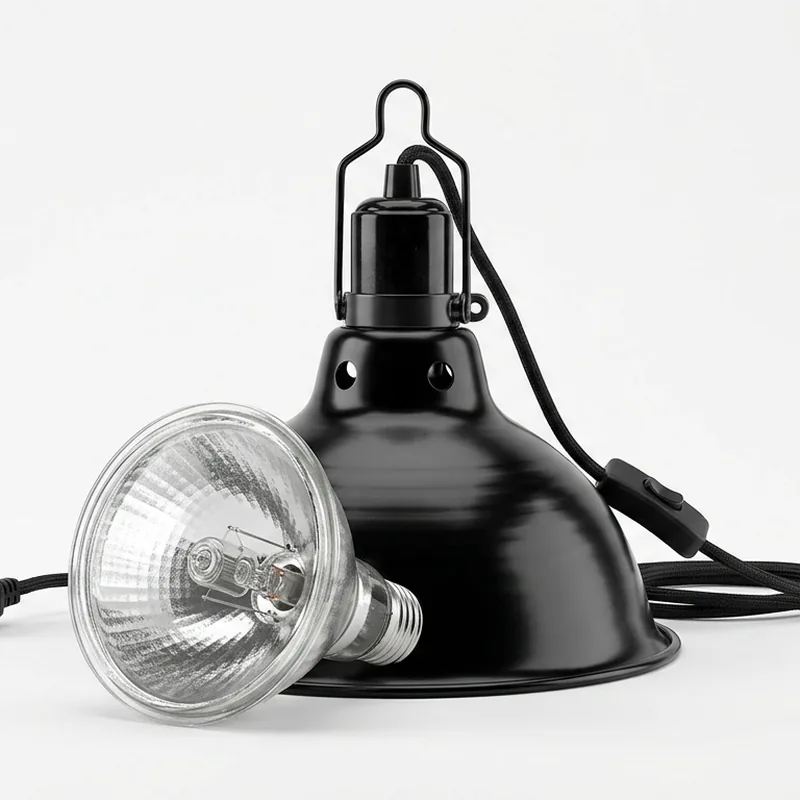
Halogen Basking Bulb + Fixture
Provides both heat and daytime light cycle for species like bearded dragons and many lizards.

Ceramic Heat Emitter
Maintains temperature after dark without disrupting a natural day-night light cycle.
The Bottom Line
A correctly matched heat source, always paired with a thermostat and verified with an independent thermometer, is one of the highest-stakes purchases in reptile keeping — get this right, and most temperature-related health issues become genuinely rare across your reptile’s entire life with you.
Seasonal Heating Adjustments
Ambient room temperature shifts between summer and winter can meaningfully affect how hard your heating equipment needs to work to maintain the target gradient — a setup that performs well in summer might struggle to maintain adequate cool-side temperatures in a cold winter room, or conversely, a summer heat wave might push the ambient temperature uncomfortably close to the basking spot target even without the heat lamp running. Reassess and adjust your setup seasonally rather than assuming a configuration that worked once will remain correct year-round.
Reading Thermometer Placement Correctly
Thermometer accuracy depends heavily on correct placement — measure the actual basking surface (not the air a few inches above it) for basking spot temperature, and measure at the animal’s typical resting level, not the enclosure’s overall ambient air temperature, for cool-side readings. A thermometer placed incorrectly can give a false sense of security even when actual conditions at the animal’s level are meaningfully different from what’s displayed.
When to Call a Reptile-Experienced Vet About Heating
If you suspect your reptile has been affected by incorrect temperatures — signs include lethargy, refusal to bask, digestion problems (cold-blooded animals rely on adequate heat to digest food properly), or visible burns — a reptile-experienced vet visit is warranted alongside correcting the underlying heating setup. Digestive issues in particular are commonly linked to inadequate basking temperature, since reptiles can’t properly digest food without reaching their species-appropriate body temperature.
Long-Term Equipment Maintenance
Dust fixtures periodically, since buildup can affect heat output and fire safety over time. Check cords and connections for wear, especially in humid tropical setups where moisture exposure is a genuine long-term risk to electrical components. Replace any fixture showing signs of damage immediately rather than continuing to use compromised equipment near a live animal and a heat source.
A Final Word on Heating Priorities
If you take away one thing from this guide, make it this: pair whatever heat source you choose with a thermostat, and verify actual temperatures with an independent thermometer rather than trusting equipment dials or general assumptions. These two habits alone prevent the overwhelming majority of heating-related injuries and deaths in captive reptiles, regardless of which specific bulb or fixture you ultimately choose.
Getting the heating setup right from day one is worth more to your reptile’s long-term health than almost any other single decision you’ll make in the entire care routine.
Take the time to measure, verify, and adjust rather than assuming a setup is correct just because it looks right — actual data from a thermometer beats visual assumptions every time in reptile husbandry.
Your reptile’s comfort and health depend on it every single day.
It’s a small, ongoing responsibility that pays off enormously in return.
Safe Heat Lamp Placement and UVB Distance
Heat lamp placement affects both safety and effectiveness, and getting the distance wrong in either direction creates a real problem — too close risks thermal burns to a basking animal, particularly climbing species that can reach closer to the fixture than expected, while too far fails to create an adequate basking temperature gradient at all. The correct distance depends on the specific bulb wattage and the enclosure’s basking spot design, but as a general practice, always verify actual surface temperature at the basking site with a temperature gun rather than relying on the bulb’s wattage rating alone, since ambient room temperature and enclosure ventilation both affect the real result.
UVB bulbs have a separate distance consideration tied to their specific output strength rather than heat — most UVB bulbs are only effective within a manufacturer-specified distance range, commonly 12-18 inches for many reptile-rated bulbs, and UVB output also degrades over the bulb’s lifespan well before it visibly stops producing light, which is why UVB bulbs need scheduled replacement (often every 6-12 months) regardless of whether they still appear to be working normally. A basking platform positioned at the correct distance for both heat and UVB simultaneously, verified with the appropriate meters rather than assumption, is worth the setup effort it takes to get right.
More Reptiles & Amphibians Resources
FAQ
Yes — a thermostat prevents overheating and is considered essential safety equipment, not optional.
No — most reptiles need a day/night cycle, so heat lamps should be on a timer that mimics natural daylight hours, not run continuously.
It depends on enclosure size and target temperature — smaller tanks typically need 50-75W, larger ones may need 100W+, always checked with a thermometer rather than assumed.
