

A front-opening glass terrarium sized to your reptile's full adult dimensions is the most practical choice for most beginner-friendly species.
| Size | Best For |
|---|---|
| 20 gal long | Juvenile leopard geckos, small species |
| 40 gal breeder | Adult bearded dragons, leopard geckos |
| 4ft+ enclosures | Larger snakes, monitor lizards |

Front-Opening Glass Terrarium
Easy access for feeding and cleaning without stressing your reptile through top-down handling.
Check PriceGlass, PVC, or Screen: Choosing the Right Material
Glass terrariums are the most common starter choice — they hold humidity well, are widely available in standard sizes, and let you see your reptile from every angle. PVC enclosures are lighter, insulate heat better (useful for tropical species that need stable warm temperatures), and resist warping over years of use, but cost more upfront. Screen or mesh enclosures suit arboreal species like some chameleons and certain day geckos that need heavy airflow, but they’re a poor choice for humidity-loving species since moisture escapes almost as fast as you can add it. Match the material to your species’ native climate rather than picking based on price or looks alone.
Ventilation Needs by Species Type
Desert species (leopard geckos, many bearded dragons) need enclosures with modest ventilation and the ability to hold a temperature gradient without excessive drying. Tropical and humidity-dependent species (crested geckos, many amphibians) need enclosures that retain humidity while still allowing enough airflow to prevent stagnant air and mold growth — look for front vents combined with a mostly solid top rather than a fully mesh lid. Arboreal species generally need more cross-ventilation than ground-dwelling species of similar climate origin, since they’re adapted to open air movement in the canopy.
Front-Opening vs. Top-Opening Access
Front-opening doors are worth prioritizing for most reptile keepers — reaching in from the top mimics the approach of an aerial predator and can stress skittish species, while a front door lets you feed, clean, and handle at the animal’s eye level, which most reptiles tolerate far better over time. Top-opening designs are more common in budget kits and screen enclosures, and while workable, they tend to make routine maintenance more stressful for both keeper and animal, especially with flighty species.
Sizing for Full Adult Growth, Not Juvenile Size
The single most common terrarium mistake is buying for the animal’s current juvenile size rather than its adult size. A bearded dragon or ball python bought as a hatchling will need an enclosure several times larger within 12-18 months, and starting in an appropriately large enclosure from day one (with hides to make young animals feel secure in the extra space) avoids a costly, stressful upgrade cycle later. Research your species’ typical adult length and activity level before buying, not just what looks proportionate to the animal in front of you today.
Substrate Compatibility
Not every substrate works with every enclosure type. Loose, moisture-retaining substrates like coconut fiber or cypress mulch pair well with glass or PVC enclosures that hold humidity, but can dry out too fast in heavily ventilated screen setups. Reptile carpet or paper towel substrates are easier to keep clean in any enclosure type and are commonly recommended during quarantine or for young/sick animals where hygiene monitoring matters most. Avoid loose substrates entirely for species prone to impaction (some young bearded dragons and leopard geckos) unless you’re confident in your ability to monitor feeding closely.
Escape-Proofing Features Worth Checking
Small reptiles and amphibians are remarkably good at finding gaps — check that lid latches are secure and rated for your species’ strength and size, that cord/cable pass-throughs for heating equipment are sized tightly, and that sliding glass doors have a working lock rather than relying on friction alone. Snakes in particular are notorious escape artists and need enclosures rated specifically as snake-secure, since many general reptile terrariums aren’t tested against a determined snake pushing on every seam.
Common Terrarium-Buying Mistakes
- Buying a “starter kit” sized for the animal’s current juvenile size. This almost guarantees an expensive upgrade within the first year or two.
- Choosing screen enclosures for humidity-dependent species. Moisture escapes faster than most heating/misting setups can compensate for.
- Overlooking latch security for strong or determined escape artists. Snakes and monitor lizards in particular need enclosures tested for their species.
- Ignoring how heating and lighting equipment will actually mount inside the chosen enclosure. Some budget enclosures lack proper fixtures for basking lamps or UVB strips, forcing awkward workarounds.
Comparing Popular Options

PVC Front-Opening Enclosure
Holds tropical humidity levels far more consistently than glass, with strong insulation that reduces heating-equipment strain.
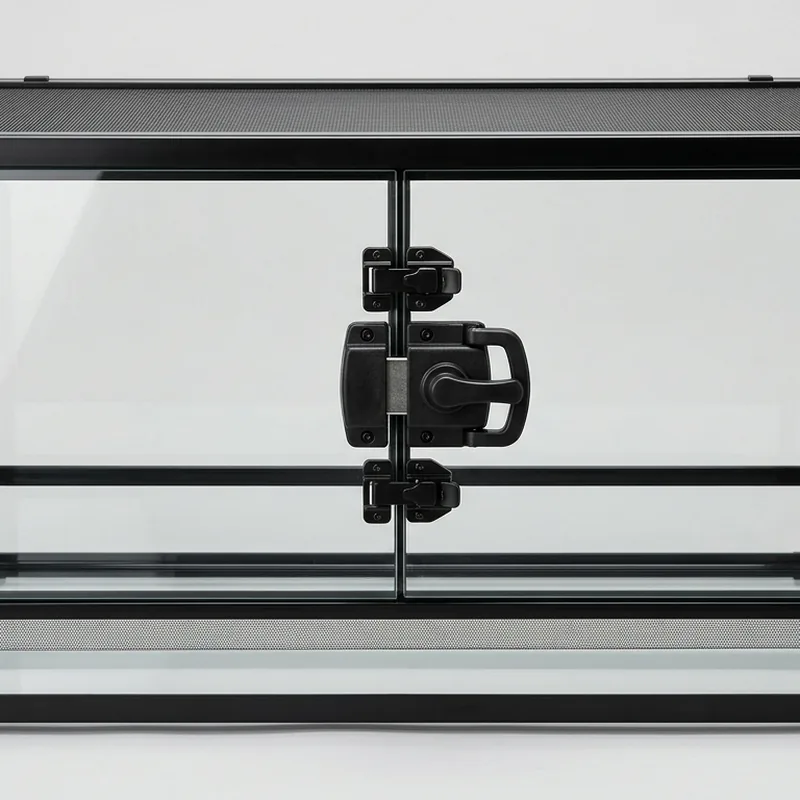
Locking Front-Vent Glass Terrarium
Secure double-latch doors built specifically to resist the persistent pushing that makes snakes notorious escape artists.
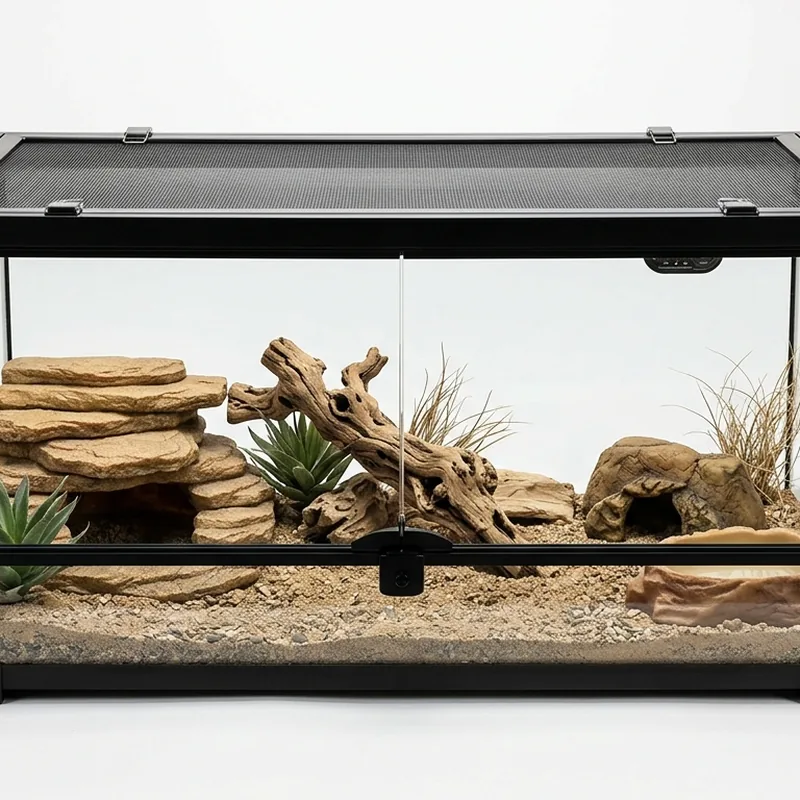
Screen-Top Glass Terrarium
A solid all-around choice for desert species that need airflow without the higher cost of a PVC enclosure.
The Bottom Line
Size for your species’ full adult dimensions, match the material and ventilation to its native climate, and prioritize front access and secure latching over price alone. A correctly chosen terrarium is one of the few purchases that genuinely affects your reptile’s day-to-day welfare for its entire life, so it’s worth the extra research before adding to cart.
Lighting and Heating Equipment Placement
Where you mount basking lamps, UVB fixtures, and heat mats matters as much as the equipment itself — basking lamps should sit above a solid, climbable perch or platform positioned at the correct distance to hit target temperatures without risk of burns, and UVB tubes need to run roughly a third to half the enclosure’s length to give your reptile a genuine choice between UVB exposure and shade, mimicking natural sun-and-shadow behavior. Enclosures with limited or awkwardly placed mounting points for this equipment often force compromises that undermine an otherwise good terrarium purchase.
Decor and Enrichment Inside the Enclosure
Climbing branches, cork bark, and varied hide placement do more than look natural — they give reptiles choices about temperature, humidity, and security that a bare enclosure can’t offer, and this behavioral choice is increasingly recognized as a genuine welfare factor, not just aesthetic decoration. Arboreal and semi-arboreal species in particular benefit from vertical space utilization through branches and platforms rather than a purely floor-based setup, even in enclosures technically sized correctly for floor space alone.
Budget vs. Premium Terrarium Options
Price differences between terrariums often come down to material quality (thicker glass, better-sealed seams), hardware durability (locks and hinges that hold up over years of daily use), and included features like built-in equipment mounting points or background panels. A mid-range terrarium from a reputable reptile-specific brand is usually a better investment than the cheapest generic option, since replacing an inadequate enclosure later costs more overall than paying somewhat more upfront for one built to last the animal’s full lifespan.
Housing Multiple Reptiles
Most reptile species do best housed individually — unlike some social mammals, many reptiles don’t benefit from cohabitation and can experience real stress, competition for basking spots, or even aggression when housed together. If you’re considering multiple reptiles, research your specific species’ social tolerance carefully rather than assuming a larger shared enclosure solves the space question; in most cases, separate enclosures per animal remain the safer, welfare-focused default.
Bioactive Enclosure Setups
Bioactive setups use live plants, a deep substrate layer with drainage, and cleanup crew invertebrates (springtails, isopods) to create a self-sustaining, naturalistic environment that reduces manual waste removal and better replicates a species’ native habitat. This approach requires more upfront research and setup effort than a traditional simple enclosure, but many keepers find the reduced maintenance and improved animal behavior worth the investment once established.
Temperature Gradient Setup Within the Enclosure
A correctly set up terrarium needs a genuine temperature gradient, not a uniform temperature — a warm basking area and a cooler retreat area let your reptile thermoregulate by choice, exactly as it would in the wild. Enclosures too small to establish a meaningful gradient force compromises on this front regardless of how good the equipment placed inside it is, reinforcing why adult-appropriate sizing matters from day one.
Cleaning and Long-Term Maintenance of the Enclosure Itself
Beyond routine spot-cleaning, a full substrate change and enclosure deep-clean on a periodic schedule (frequency depends on substrate type and bioload) keeps bacterial and odor buildup in check. Check glass seals, door tracks, and hardware periodically for wear, since terrariums see years of daily opening and closing that eventually affects hardware function even in well-built enclosures.
Seasonal Adjustments to Enclosure Setup
Home heating and cooling cycles shift ambient room temperature enough across seasons to affect how hard your terrarium’s heating equipment has to work — checking temperatures more frequently during seasonal transitions catches drift before it becomes a problem, since a thermostat setting that worked fine in summer room temperatures may under- or over-perform once winter heating changes the baseline.
Real Owner Feedback on Terrarium Choices
Experienced keepers consistently report that the terrarium they wish they’d bought first was larger and more feature-complete than their actual first purchase — front-opening access, adequate mounting for equipment, and adult-appropriate sizing come up repeatedly as the details that matter most in hindsight, more than any specific brand name. This pattern, echoed across countless keeper forums and communities, is worth taking seriously before making your own first purchase, since it reflects genuine lived experience rather than marketing.
More Reptiles & Amphibians Resources
FAQ
Size to the adult size of your species — many beginners undersize their first enclosure based on the animal's juvenile size.
PVC terrariums retain heat and humidity more efficiently, making them a better choice for tropical species, while glass is often preferred for desert species needing more ventilation.
Yes — arboreal species need more vertical height, while ground-dwelling species benefit more from floor space than height.
